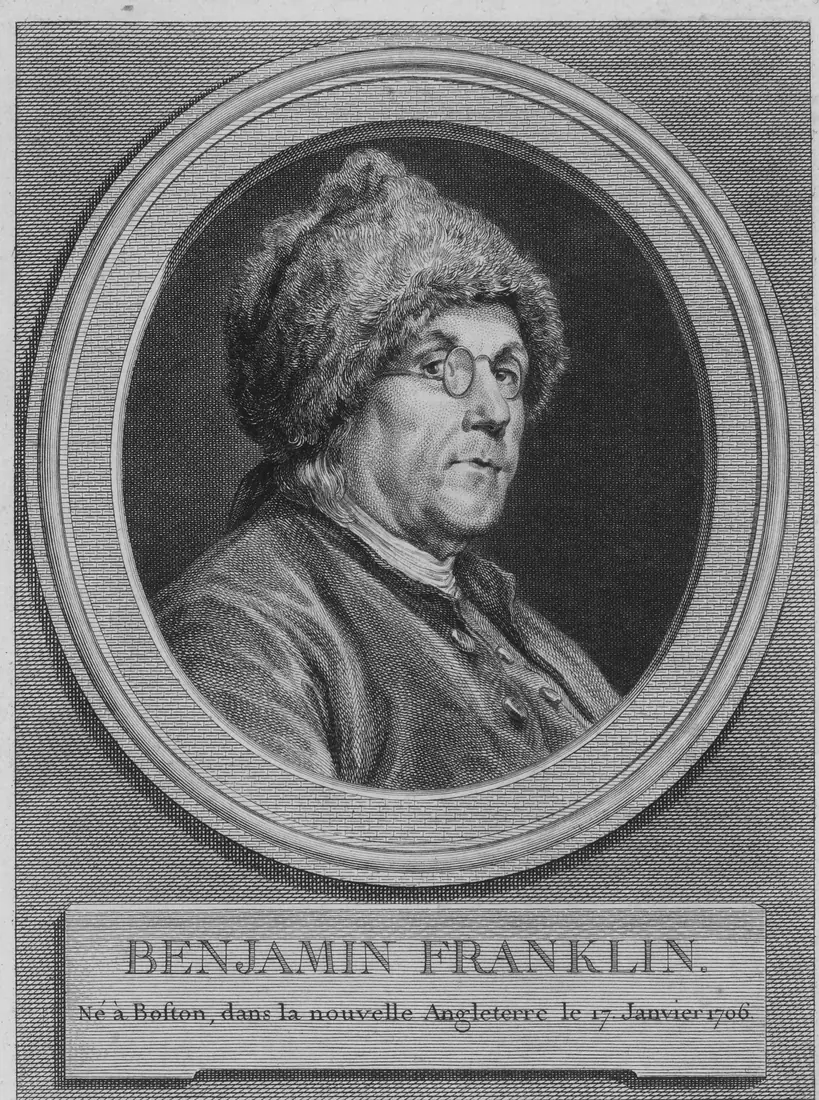
Franklin’s little book
Benjamin Franklin wrote the second part of his memoirs in France, in 1784, while he was serving as the American minister there. He was seventy-eight. In it he went back to the years when he was setting up as a printer in Philadelphia, and to a plan from that time. “It was about this time,” he wrote, “I conceived the bold and arduous project of arriving at moral perfection. I wished to live without committing any fault at any time.”
Thirteen virtues
First he made a list. He drew up thirteen virtues, each with a short precept: Temperance (“Eat not to dullness; drink not to elevation”), Silence, Order, Resolution, Frugality, Industry, Sincerity, Justice, Moderation, Cleanliness, Tranquillity, Chastity and Humility. Then he made a little book. He ruled each page with red ink into seven columns, one for each day of the week, and crossed the columns with thirteen red lines, one for each virtue. Every evening he examined the day and marked, “by a little black spot, every fault I found upon examination to have been committed respecting that virtue upon that day”.
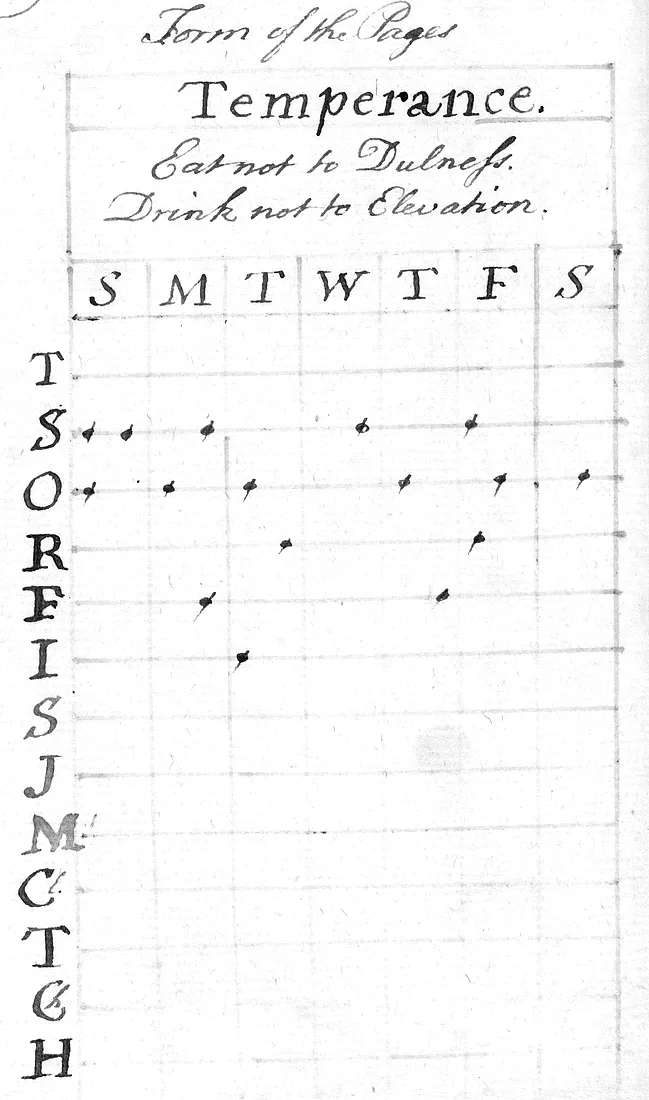
He worked on one virtue at a time, giving each “a week’s strict attention” and leaving the others, as he put it, “to their ordinary chance”. Thirteen virtues took thirteen weeks, which made four complete courses a year, and he hoped that after enough of them he would be “happy in viewing a clean book”.
Two questions a day
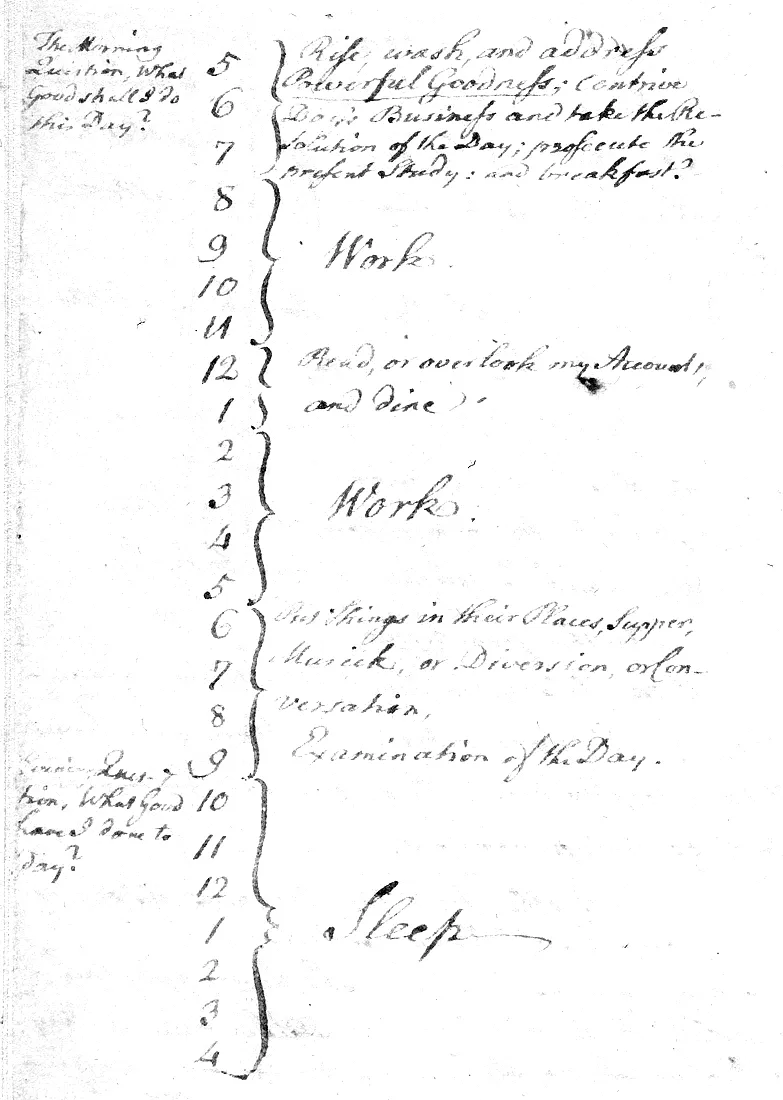
The same book held his daily timetable, drawn up for the virtue of Order. The day began at five with what he called the Morning Question, “What good shall I do this day?”, and ended with the Evening Question, “What good have I done to-day?” In between came work, reading, accounts and dinner, and in the evening “Musick, or Diversion, or Conversation”.
More faults than he expected
He was “surprised to find myself so much fuller of faults than I had imagined; but I had the satisfaction of seeing them diminish.” He scraped out the old marks so often to make room for new ones that the paper book “became full of holes”. So he copied the tables onto the ivory leaves of a memorandum book and marked his faults in pencil, which he “could easily wipe out with a wet sponge”.
Order, and the speckled axe
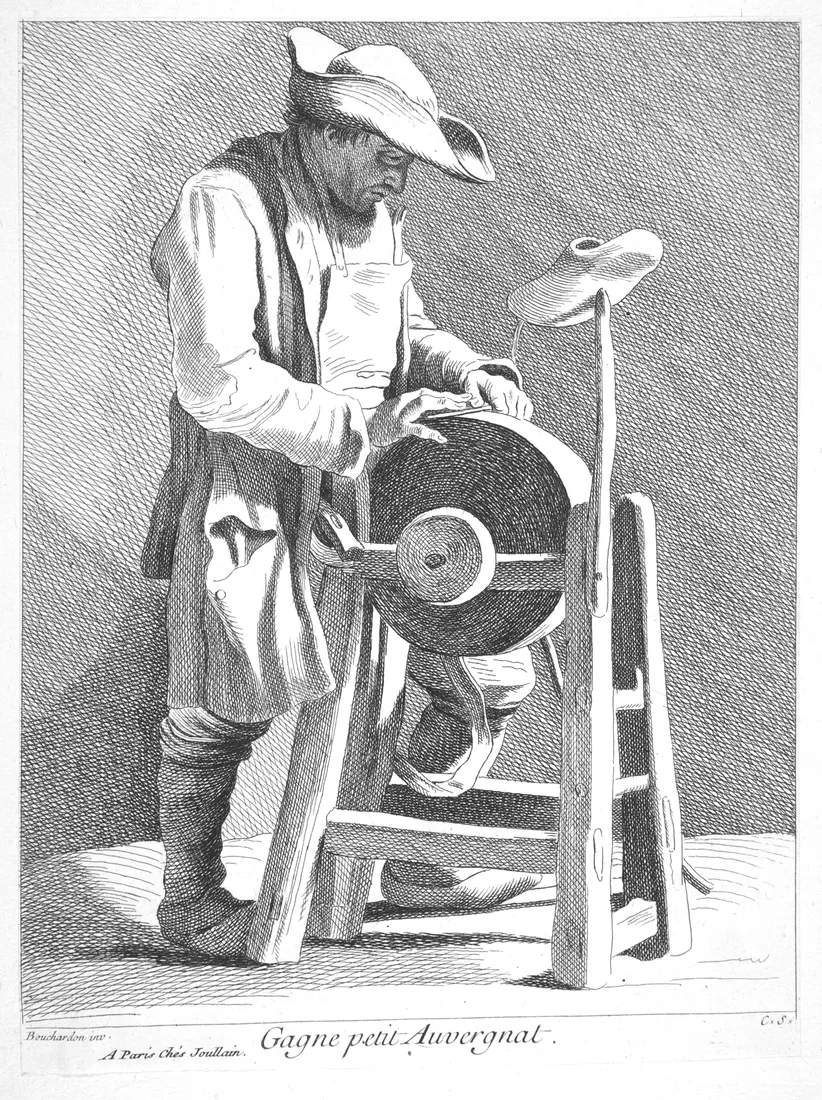
“My scheme of Order gave me the most trouble,” he wrote. A timetable might suit a man whose business left him the disposition of his own time, he decided, but it “was not possible to be exactly observed by a master, who must mix with the world.” He was almost ready to give up, like a neighbour of his who bought an axe from a smith and wanted its whole surface as bright as the edge. The smith agreed to grind it if the man would turn the wheel. The man turned while the smith pressed the axe “hard and heavily on the stone”, and at length he asked to take it as it was. “No,” said the smith, “turn on, turn on; we shall have it bright by and by; as yet, it is only speckled.” “Yes,” said the man, “but I think I like a speckled ax best.”
A voice “that pretended to be reason” offered him much the same excuse: that such extreme nicety “might be a kind of foppery in morals, which, if it were known, would make me ridiculous; that a perfect character might be attended with the inconvenience of being envied and hated; and that a benevolent man should allow a few faults in himself, to keep his friends in countenance.”
The book he carried
He never reached the perfection he had set out for, and says so. He still thought the attempt was worth it:
I was, by the endeavor, a better and a happier man than I otherwise should have been if I had not attempted it.
Over the years the courses thinned out, to one a year and then one every several years, until he stopped altogether, being “employed in voyages and business abroad, with a multiplicity of affairs that interfered”. He added: “but I always carried my little book with me.”
Sources: Benjamin Franklin, Autobiography, Part Two (written 1784), via Hanover College and USHistory.org. Library of Congress, guide to the Autobiography. Encyclopedia of Greater Philadelphia, The Autobiography of Benjamin Franklin.